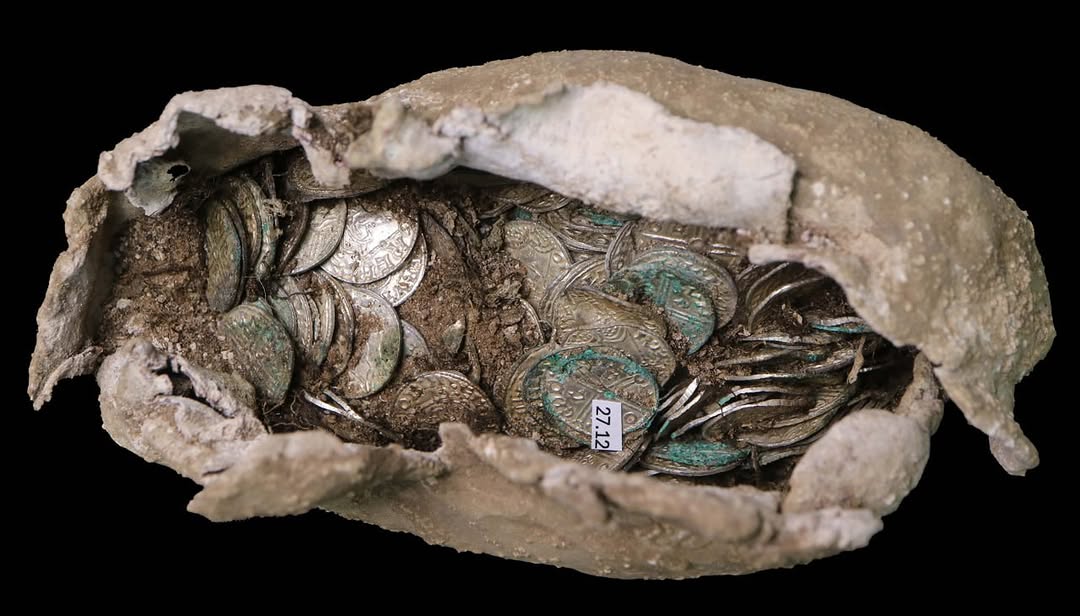
A hoard of 11th-century coins, wrapped in lead, was found on the coast of Suffolk, eastern England.
It contained 321 silver coins minted between 1036 and 1044, which were first wrapped in cloth before being encased in lead.
The site where it was discovered, Sizewell C, is earmarked for the construction of a nuclear power station. Contractors from Oxford Cotswold Archaeology were brought in to excavate the site before construction began. The team discovered the hoard at the intersection of two medieval boundary lines. The hoard, still tightly sealed in lead, was moved to a laboratory, where conservators carefully opened it and removed the coins.
All the coins were silver pennies, with the exception of two halfpennies, so the sum is significant, but not excessive. Based on prices recorded in documents from the period, it would have been enough to buy 16 cows. These were probably the savings of someone who earned a good income, perhaps a prosperous farmer or artisan, but certainly not a member of the local elite.