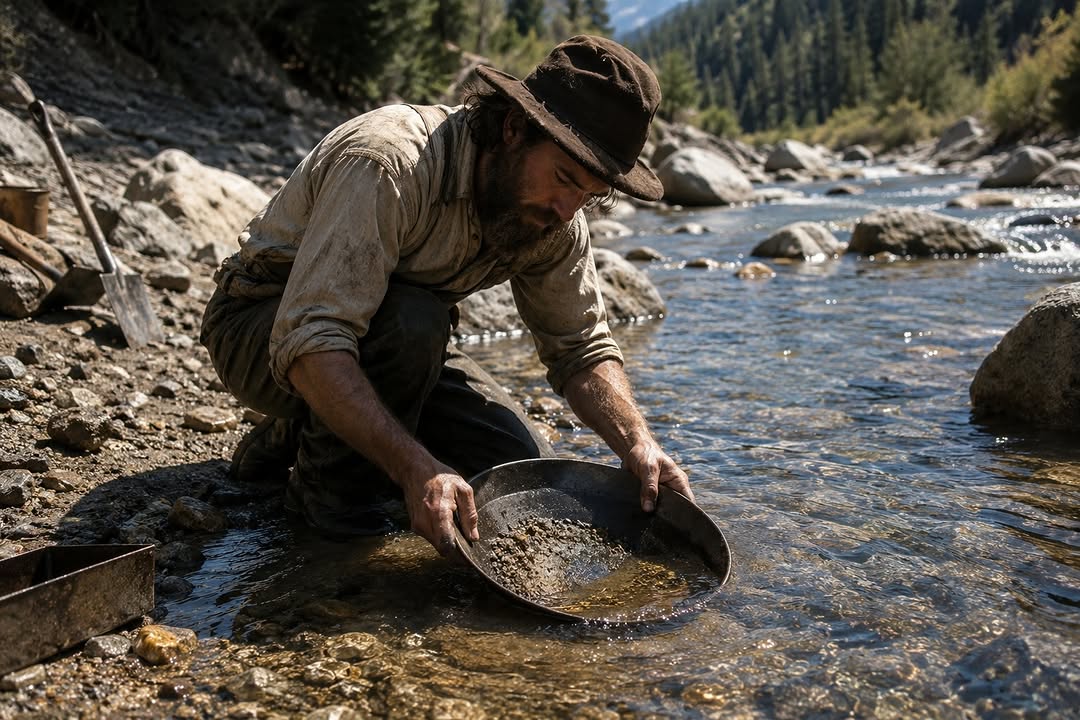
In 1848, gold nuggets were discovered in California, and tens of thousands of people rushed there: farmers, sailors, unemployed workers, and adventurers. Many arrived with a simple idea in mind: reach the river, scoop some sand into a pan, and life would change forever. But the land quickly revealed a harsher reality. The best spots were claimed first, the work was exhausting, food was expensive, and disease and violence lived side by side with the dream of striking it rich.
A prospector could spend weeks washing mud and find only tiny flakes. Meanwhile, the merchants selling shovels, pickaxes, tents, boots, flour, and coffee made money every single day. They didn’t need to guess where the gold vein was. All they needed was a crowd of people convinced it was somewhere nearby. The more newcomers arrived, the higher the prices climbed. Things that cost almost nothing in an ordinary town became luxury goods in a gold mining camp.
One of the most telling figures of the era was Sam Brannan. He was among the first to spread the news of the discovery, running through San Francisco with a bottle of gold dust and shouting about gold in the rivers. But he never rushed into the water with a pan himself. Instead, he had already bought up tools and supplies in advance — and sold them to the people who did.