@ww2_history_digger <<< 📷
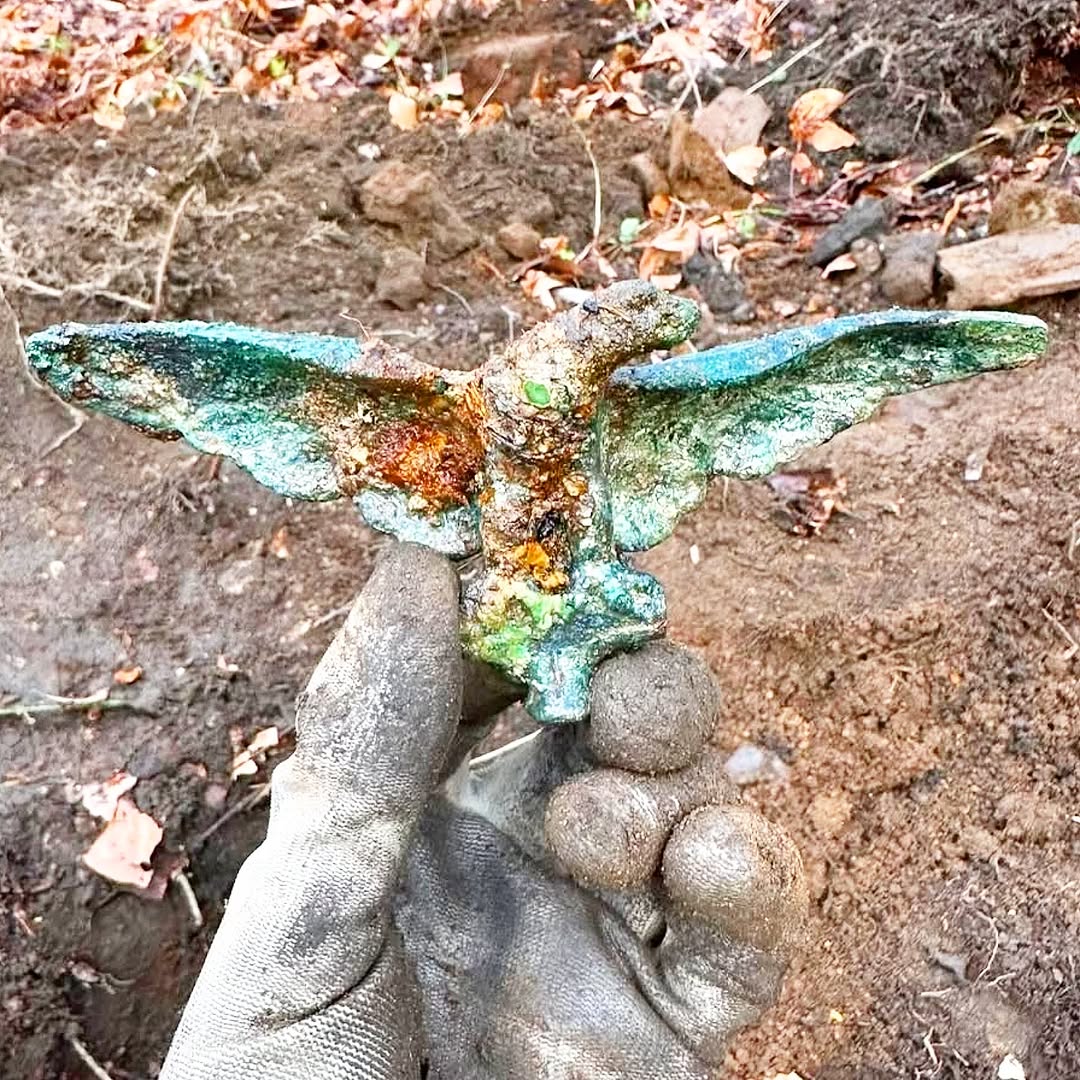
German bronze eagle found lately in a dump. It was found in a small dump pit.😲😱😳
German bronze eagle found lately in a dump. It was found in a small dump pit.😲😱😳
This bronze (or brass) eagle is a classic example of the Reichsadler (Imperial Eagle) from the era of the Third Reich. The Germans really did attach such eagles to flags, standards (regimental and battalion banners), flagpoles, and the finials of military flags, as well as sometimes to car pennants or decorative elements.
Brief history of the symbol:
Origin: The eagle as a symbol dates back to Ancient Rome (the Roman legionary eagle — Aquila). In Germany, it became the main heraldic symbol as early as the time of the Holy Roman Empire (Reichsadler).
Origin: The eagle as a symbol dates back to Ancient Rome (the Roman legionary eagle — Aquila). In Germany, it became the main heraldic symbol as early as the time of the Holy Roman Empire (Reichsadler).
During the Weimar Republic (1919–1933), a black eagle without a swastika was used.
Such small bronze eagles most often served as finials on flagpoles or banner staffs. They were attached to the top of the pole and were clearly visible during parades and in battle.
Such small bronze eagles most often served as finials on flagpoles or banner staffs. They were attached to the top of the pole and were clearly visible during parades and in battle.
Many of them were cast from bronze, brass, or aluminum. After the war, they were often removed, hidden, or thrown away — which is why such finds in dumps and in the ground are not uncommon among diggers and relic hunters.